
Without oversight, the High Seas Treaty is 'just a piece of paper', says Paul Watson
The main point
Ocean activist Paul Watson stated that, without adequate enforcement, the High Seas Treaty ratified in 2024 is "just a piece of paper."
"In 2024, the High Seas Treaty on the Protection of Biodiversity Beyond National Jurisdiction was officially ratified, but without enforcement, it's just a piece of paper. The marine protected areas look good on paper, but enforcement is inadequate or nonexistent," he said.
According to Watson, there are sufficient instruments to guarantee marine protection. However, there is a lack of political and economic will to enforce existing agreements.
"We have all the regulations, laws, and treaties necessary to protect marine life and ecosystems. What we lack is the economic and political will to enforce these laws," he said.
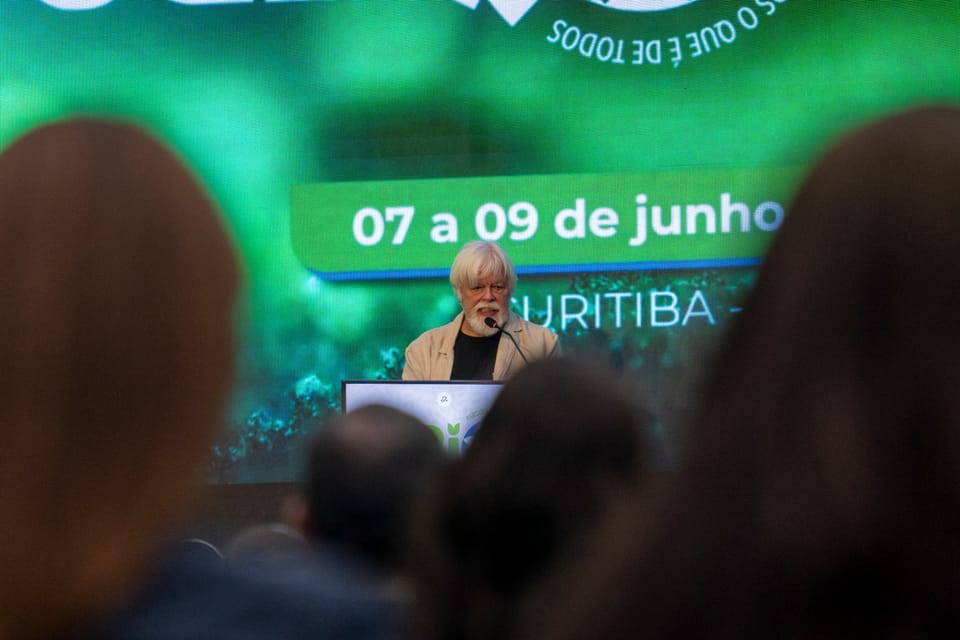
The statements were made in writing, in response to questions sent by Correio Sabiá to the captain's press team. Watson participated in the UCBio event in Paraná, held on June 7, 8, and 9.
Other suggestions
Watson also defended in the interview given to Correio Sabiá:
- A ban on oil exploration in the Amazon River estuary;
- Combating illegal fishing;
- Having stopped deep-sea mining;
- Eliminating krill fishing (details below) and domestic salmon farms;
- A moratorium on industrialized fishing.
Read the full interview
The full interview is below:
Correio Sabiá: What threatens the ocean most today: climate change itself or the inability of governments to act quickly enough?
Captain Paul Watson: The ocean faces threats from multiple sources: pollution, overfishing, the expanding krill fishery, the salmon farming industry, habitat destruction, climate change, and the emerging deep-sea mining industry.
It is not merely a matter of governments not acting quickly enough. Governments are failing to address these threats entirely. We possess all the necessary regulations, laws, and treaties to protect marine life and ecosystems. What we lack is the economic and political will to enforce these laws.
Governments, as a rule, prioritize industry by championing corporate profits, jobs, and tax revenue. Very little effort is devoted to protecting non-human species or conserving ecosystems.
The most important government ministries are finance, agriculture, fisheries, and manufacturing. In contrast, the least important departments are those dedicated to the environment and conservation.
In 2024, the High Seas Treaty on the Protection of Biodiversity Beyond National Jurisdiction was officially ratified, but without enforcement, it is simply a piece of paper. Marine Protected areas look good on paper, but enforcement is inadequate or non-existent.
Correio Sabiá: Brazil controls one of the largest maritime areas on the planet, including the Blue Amazon. What should the country do to become a global leader in ocean protection and, perhaps, improve funding for ocean initiatives?
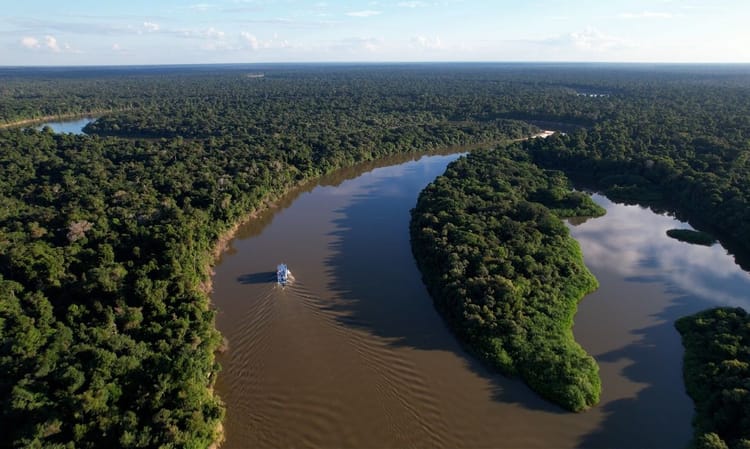
Captain Paul Watson: Brazil is a caretaker nation with a global responsibility to protect the green and the blue lungs of the planet. The protection of the rainforest and the protection of marine life must be priorities for Brazil. Offshore drilling at the mouth of the Amazon should be prohibited. Illegal fishing should be strictly enforced.
Correio Sabiá: After decades of confronting governments and powerful economic interests, what still gives you hope for the ocean's future?
Captain Paul Watson: What gives me hope is that the Ocean is resilient, but we need to give it time to repair the damage we have inflicted on it. There should be a moratorium on industrialized fishing; we need to halt deep-sea mining, eliminate the krill fishery, and domestic salmon farms. The damage can be repaired. When people tell me that the solutions are impossible.
I reply that impossible problems can be solved by finding impossible solutions, and impossible solutions can be realized through passion, courage, imagination, and persistence. In 1972, the very idea that Nelson Mandela would one day be President of South Africa was unthinkable and impossible, but the impossible became possible.
Correio Sabiá: We know more about the Moon's surface than about our ocean. At the same time, countries have committed to protecting 30% of the seas by 2030. How can we define conservation priorities and effective public policies when we still know so little about the marine ecosystems we are trying to protect?
Captain Paul Watson: Commitment to protect 30% is not the same thing as actually protecting 30%. This sounds nice in theory, but not a single “solution” from any international environmental or climate conference since 1972 has ever been implemented. We can’t look at ecosystems like this anyway.
We need to protect and conserve 100%. Can a person survive if we remove 70% of their organs? Industrial exploitation for profit cares little for the future and only for quarterly profits.
This requires a biocentric approach, working in harmony with all species and ecosystems, taking what we need and returning what other species need. We need to live in accordance with the 3 laws of ecology – Diversity, Interdependence, and Finite Resources.
Member discussion